.png)

Designing an AI Fitness App: Pyndra
Helping users transform saved workout videos into personalized training plans they can actually follow.
Focus: Product strategy • UX/UI design • Mobile App development • AI Experience Design
Purpose
Many people save workout videos across TikTok, Instagram, and YouTube with the intention of trying them later. Over time, those saved videos become disorganized, making it difficult to build a consistent routine or measure progress.
Pyndra was designed to bridge that gap by turning saved workout content into structured, personalized workout plans while tracking progress over time.
Scope
-
Product Strategy
-
UX Research
-
User Flows
-
Information Architecture
-
AI Experience Design
-
Dashboard Design
-
Progress Tracking
-
Mobile-First UI
-
Design System
Methodology
The design process focused on understanding how users discover, organize, and complete workouts while reducing the friction between finding fitness content and actually using it.
Methods included:
-
User flow mapping
-
Wireframing
-
High-fidelity UI design
-
AI interaction design
-
Responsive prototyping
The Problem
People discover workouts everywhere—TikTok, Instagram, YouTube—but rarely turn them into a consistent fitness routine. Saved workout videos quickly become scattered across platforms, making it difficult to organize exercises, build a balanced program, or track progress over time.
Pyndra was created to bridge the gap between inspiration and execution by transforming saved workout videos into personalized, AI-generated workout plans that users can actually follow.
Product Goals
1. Transform saved workout videos into structured workout plans
Reduce the effort required to organize workouts from multiple creators
2. Use AI to personalize workouts based on user goals
Create an intuitive, motivating experience that keeps users engaged
3. Provide progress tracking to help users build sustainable habits
Keep users motivated by seeing their progress in real time
Main Issues
User Journeys

Designing the Pyndra Experience
The interface was designed to feel modern, motivating, and approachable while keeping the user's fitness journey at the center of every interaction.
Special attention was given to reducing cognitive load through clear navigation, consistent visual hierarchy, and simplified workflows. The experience balances AI-powered automation with user control, allowing users to customize their plans while benefiting from intelligent recommendations.
A scalable design system was created to maintain consistency across dashboards, workout management, analytics, and mobile experiences.
Onboarding


Saving a video




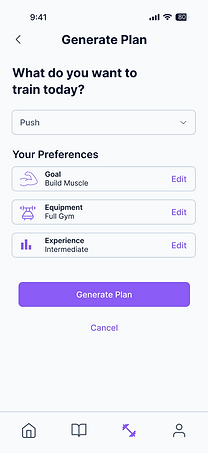
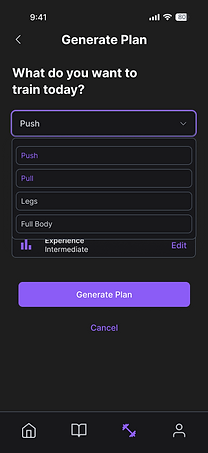
Plan generation






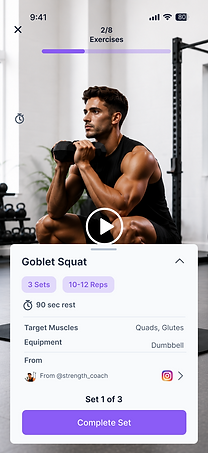
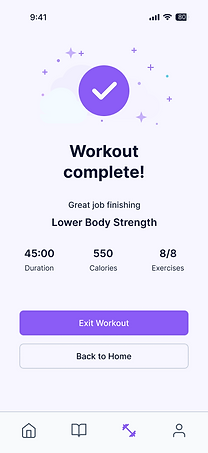
Workout





Key Design Decisions
AI-First Without Losing User Control
Rather than replacing user choice, AI acts as a coach that organizes workouts and suggests personalized plans while allowing users to adjust recommendations whenever needed.
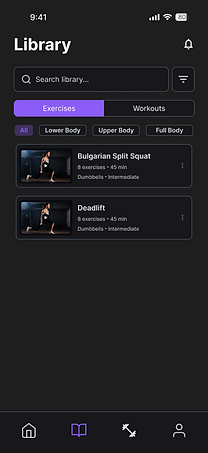
Centralized Workout Library
Instead of forcing users to remember where they saved workouts, all fitness content is collected into one searchable location that serves as the foundation for personalized workout plans.
Clean, Modern Interface
A minimal visual design with generous spacing, clear typography, and intuitive navigation keeps the focus on workouts while reducing distractions and making the platform approachable for users of all experience levels.
Pyndra demonstrates my ability to design an AI-powered consumer product from concept to high-fidelity interface design. The project challenged me to combine AI, content organization, and habit-building into a cohesive experience that helps users turn fitness inspiration into consistent action.
By focusing on simplicity, personalization, and long-term engagement, the final design transforms scattered workout content into structured fitness plans that are easy to follow and motivating to complete.